
Witnesses of Faith
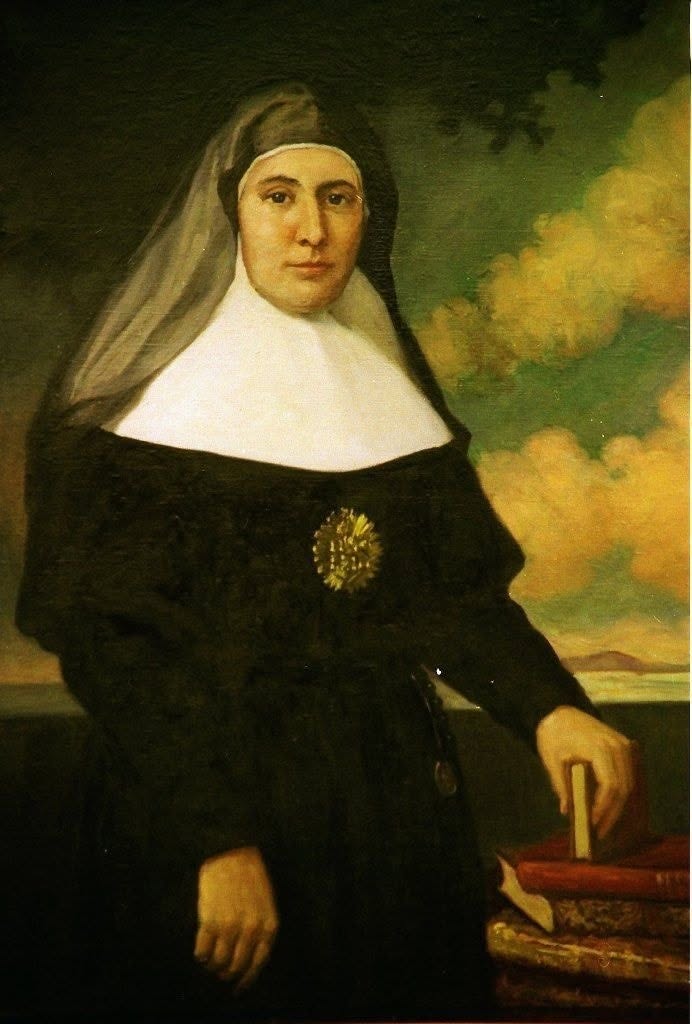
Saint Cándida María de Jesús (1845-1912) – Religious Sister and Founder – born on 31 May 1845 in Andoáin, Guipúzcoa, Spain as Juana Josefa Cipitria y Barriola and died on 9 August 1912 in Salamanca, Spain of natural causes – born Juana Josefa Cipitria y Barriola – was a Spanish professed religious and the founder of the Daughters of Jesus. The order – founded in 1871 – was under Jesuit direction from her spiritual director and was involved with the education of children in Salamanca though expanded during her lifetime.
Mother Candida, whose name was Juana Josefa Cipitria y Barriola, was born to a poor family. As a young girl she left her land to work in Castile in order to help her family financially. Gifted with a great sensitivity to the neediest, she was not indifferent to the situations of those living nearby. Therefore, even at the risk of losing her job, she would say, “Where there is no room for the poor, neither is there room for me”.
Her desire to do God’s will was the sole driving force in her life. On 2 April 1869, in the church of “The Rosarillo” in Valladolid, before the altar of the Holy Family, she asked the Lord once again to make His will clear to her and God more clearly expressed His desire “to found a Congregation with the name of Daughters of Jesus, dedicated to the salvation of souls, through education and instruction of children and youth”.
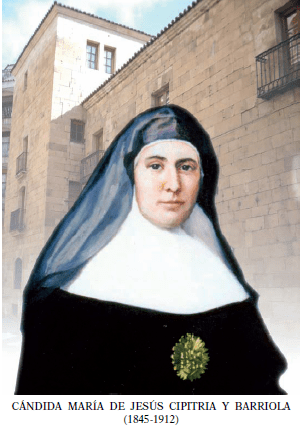
It was in Salamanca on 8 December 1871, when, with five other women, her adventure began with nothing more than the trust born of the knowledge that what one undertakes is “what God wants”. In this manner and with the name of Candida Maria de Jesus, this woman of scant education and scarce material means founded the Congregation of the Daughters of Jesus in one of the most important university cities of the 19th century.
The exclusion of women and the economically weaker classes from the fields of education moved Mother Candida to begin this path. And very soon what began in Salamanca extended throughout the Spanish geography. Later, on 3 October 1911, the first Daughters of Jesus set out for Brazil, fulfilling her dream: “I would go to the ends of the earth in search of souls”.
On 9 August 1912, Mother Candida, simple and courageous woman who made her life a constant surrender to the will of God, died in Salamanca. St Pope John Paul II, in Rome, Beatified her on 12 May 1996 and Pope Benedict XVI canonized her on 17 October 2010.
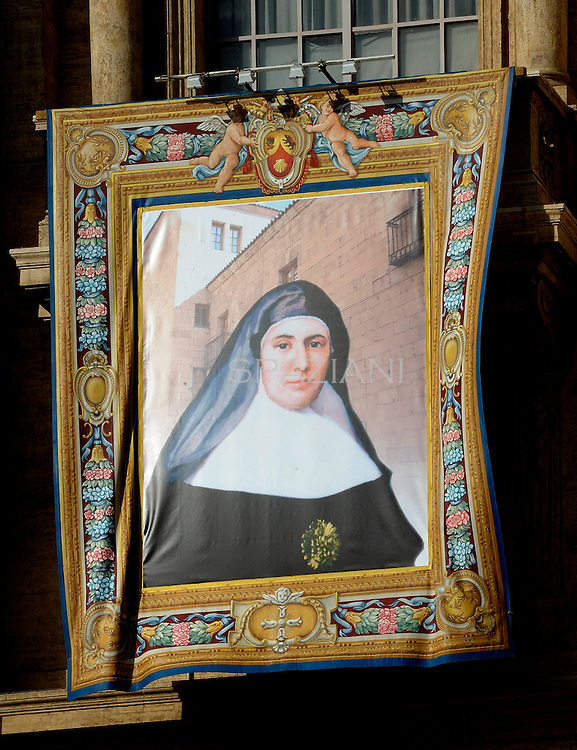
Today, the Congregation is present in 17 countries, at the service of others and with special attention to the most needy.
On March 6, 1898, Maria Antonia was born in Tolosa (Guipúzcoa), in Spain. Her parents, Don Ramón Bandrés and Doña Teresa Elósegui, had fifteen children. María Antonia was the second. She was baptized two days after her birth and confirmed at the age of four. On May 23 she received her First Communion.
From then on, the center of her spiritual life, which was also characterized by filial love for the Virgin, would be Jesus in the Blessed Sacrament. Because of her fragile health, she received her first lessons at home. Later she attended the school of the Daughters of Jesus, which had been founded in Tolosa by Mother Cándida María de Jesus.
From early childhood, Maria Antonia was distinguished for a profound spiritual life uncommon for her age, for her apostolic zeal, humility, charity, love for Jesus and the Blessed Virgin expressed in many small gestures, obedience and the spirit of sacrifice. Deeply concerned about the poor and the needy, she carried out in the periphery of Tolosa, and in particular with the women workers of the union, an evangelizing social work rare in those times.
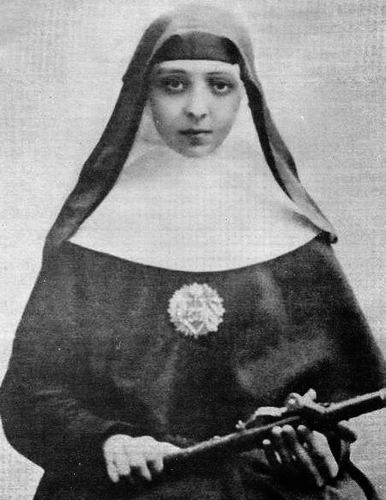
At the age of seventeen, she entered the Congregation of the Daughters of Jesus in Salamanca on December 8, 1915. On May 31, 1918, she pronounced her religious vows. A few days earlier, she had written, “To live crucified with Jesus by means of the holy vows, and, by means of them, to belong to God entirely and forever. May only Jesus and Mary remain in my heart”.
Already before her religious profession, she had made the most beautiful oblation to the Lord: following the impulse of an interior inspiration, she offered her life to God for the conversion and salvation of her uncle Antonio, her baptismal godfather. It seemed that the Lord accepted this generous offering. Her health, which had never been robust, began to weaken further, and soon a relentless illness appeared, that at the beginning of the year 1919 was diagnosed as intestinal infection, resistant to any treatment.
On Good Friday, April 25, she received the Viaticum fervently and joyfully. Then she said that she still lacked the Sacrament of the Sick to get ready for the encounter with God. She requested and was allowed to pronounce her perpetual vows, and she recited the formula firmly. With deep peace she repeated, “This is dying? How sweet is death! How sweet it is to die in the religious life!”
At the first hours of April 27, 1919, at the age of 21, she entered eternity, after having invoked the Blessed Virgin “Mother of mercy.”
Antoñita’s example of courage and faith leads us to reflect on the angel Gabriel’s words to the Blessed Virgin, “Do not be afraid, Mary, for you have found favour with God” (Lk 1:30), which is also the theme that Pope Francis has chosen for his Message for the 33rd World Youth Day (Palm Sunday, 25 March 2018). He wants us to “… seek, together with her, to listen to the voice of God who inspires courage and bestows the grace needed to respond to his call: ‘Do not be afraid, Mary, because you have found favour with God’.”
The Pope assures us, “God also reads our inmost heart. He knows well the challenges we must confront in life, especially when we are faced with the fundamental choices on which depend who we will be and what we will do in this world. It is the ‘shudder’ that we feel when faced with decisions about our future, our state of life, our vocation.” The Holy Father urges us to make an act of faith in God, which means “believing in the fundamental goodness of the existence that God has given us and trusting that he will lead us to a good end.”
Antoñita, who was of lively and nervous temperament, needful of a constant self-control, also had to confront challenges in making fundamental choices. But she knew how to focus her affectivity and tenderness of heart to superior ends, and although she loved her family deeply, she made God her Absolute … “To remain silent to the point of heroism, to suffer until death, during my whole life, permanently”, was a fixed point in her thinking. These words might make us think of a sad and miserable girl, but Dr. Filiberto Villalobos of Salamanca, the doctor who attended to her, declared: “From the first time I visited her as a doctor, in the Novitiate of the Hijas de Jesus in Salamanca, I was impressed by this sister’s joy and attraction. During her illness, which ended in death, she never complained of the gravity of her ailment nor of the bitterness that it could have caused her. I always found her smiling and happy…”
It was as if Antoñita knew what Pope Francis insists in his Message, that “our life is not pure chance or a mere struggle for survival, rather each of us is a cherished story loved by God.” On her deathbed, she confided, “For me everything has been difficult, cold, dry; Jesus has not gifted me with his caresses; but now I am filled with peace and consolation: I feel that the Virgin is beside me, that Jesus loves me, and I love Him.”
For Dr. Villalobos, Antoñita was a strong witness of that Love. When he visited her for the last time on the afternoon of April 26, 1919, he was left amazed. Even more than a quarter of a century later, he would write of that experience of his:
I was very impressed. Sentiments of tenderness, admiration, and amazement kept me from conversing coolly with that sister of 21 years who told me, happily and joyfully, of her impending death. I wanted to be finished with the emotional scene, but at the same time, I did not want to be separated from that supernatural creature. I bade Sister Antonia an anguished goodbye, saying “Till tomorrow”, and she answered me smilingly, “Till heaven”.
And a few hours later, singing ejaculations, the pure and generous heart of that Daughter of Jesus left the world. That afternoon, like so many others, I had gone to the novitiate with Don Miguel de Unamuno, a very good friend of the Bandrés family. Don Miguel was waiting for me on the sidewalk near the Novitiate. There are few men so sensitive as Don Miguel, as to able to appreciate the grandeur and gentleness of Sister Antonia’s sublime spirit. And my account so profoundly touched his soul – ever tortured by worry and anxiety about the next life, – that in our walks through the streets and byways of this city of Salamanca, the sweet and joyful death of the angelic sister became a frequent topic in our conversations. She had never asked me, as D. Miguel did many, many times: “What will become of us when we die?” Unamuno’s extraordinary knowledge and genius always shattered in the face of the mysterious fate of the human soul…
Blessed Maria Antonia, so young, and, like Mother Mary, so strong a witness of Courage and Love. To the young people of today, we share the Pope’s invitation: “to contemplate Mary’s love: a caring, dynamic and concrete love. A love full of boldness and focused completely on the gift of self. … a love that is service and dedication, above all towards the weakest and poorest, love that transforms our faces and fills us with joy.”
May Blessed Antoñita inspire us with her example and assist us with her prayers!
Anna-María Cinco, FI
1. Much of the material here about Antoñita’s life and virtues was taken from the Decree on the Heroic Virtues issued on April 6, 1995 by the Congregation for the Causes of Saints, Vatican City.
2. Miguel de Unamuno y Jugo (29 September 1864 – 31 December 1936) was a Spanish Basque essayist, novelist, poet, playwright, philosopher, professor of Greek and Classics, and later rector at the University of Salamanca. His major philosophical essay was The Tragic Sense of Life (1912). [Wikipedia]
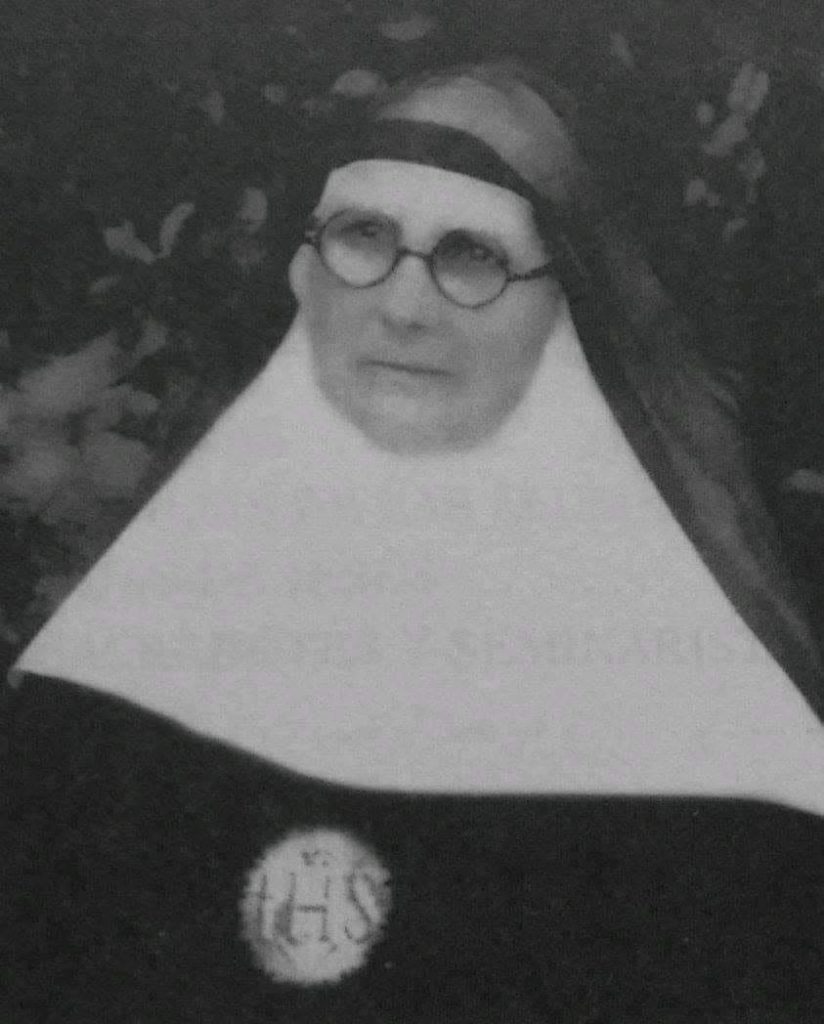
On July 6, 57 years ago, a Daughter of Jesus gave her last breath and peacefully went home to the Father. She was 81 years old, having spent the last 33 years of her life serving the Lord in the school lobby, warmly welcoming the students, their parents and other visitors, the priests who came to celebrate Mass and the little boy who served at the altar, and practically everyone who passed through the school gates, especially the poor and the needy.
One of the first six Daughters of Jesus to venture outside Spain in obedience to Mother Candida, at the age of 32 she experienced the pain of separation from her loved ones (Mother Candida and her sisters), and discovered the joy of being united with God by doing His will. She wrote Mother Candida soon after having arrived at her assignment after 15 days on a ship, 5 days on a train, and 15 days of braving the jungle on horseback to reach a land strange and unknown. She admitted how much she felt the separation from Mother Candida and the other sisters, but then continued by sharing what she felt deep in her heart: “… but in the midst of all this, I felt an inner impulse that made me say: it is so beautiful to do God’s will in everything; and I, at this moment, with this separation, am fulfilling it as well. And this encouraged me, and it continues to encourage me, because it is the motto that I try to have in everything.”
It was probably this experience of Beauty and Truth and Goodness that attracted the students to her, young girls who would seek to converse with her at the lobby during breaks and after class. Eventually some of them would become Daughters of Jesus, being led like her to discover that indeed, it is so beautiful to do God’s will. From her, they received simple lessons in life – how to see Jesus in the poor, to love Mary as Mother and Refuge, to struggle against selfishness and self-indulgence and to devote themselves diligently to their studies, etc. In short, to find joy and beauty in knowing God and seeking His pleasure. Only 9 years after her arrival, she was already known for helping young men who would become priests. A particular story illustrates this. In the year 1936, a 19-year old seminarian who was only passing through the city, went to see her at the recommendation of the master of the house where he was staying. The landlord had told him that all the seminarians there, including those who were passing through, would go to the school to ask for her prayers. The young man was profoundly impressed by her simplicity and humility, and it led to regular visits to her, faithfully made at the end of the school year; and the relationship was to last until her death.
The sisters who lived with her in community, especially those who were just beginning their religious life, found consolation in her person and example amid their struggles, and received the advice and support which they needed and which they treasured because it led them to the path of obedience, self-denial and deep joy and peace which affirmed them in their vocation. Her superiors found in her a quiet and firm support that encouraged them in difficulties.
In her previous assignment, she had lived through the bitter pain of closing an apostolic work sixteen years after the foundation. As the Vicesuperior she had known of the decision before the others did, and was constrained to observe silence and prudence until it was communicated. The community’s experience was one of deep, wrenching pain, but she went meekly to her new “home”, once more finding God there. Other sisters were markedly edified by her witness.
A surprise awaited her in her new assignment. A surprise not only to her but even to the other sisters, who expressed their astonishment. In those days there were two kinds of sisters: the teaching sisters, and the coadjutor sisters who helped them. A teaching sister, she was assigned to the lobby,to be doorkeeper, a work for coadjutor sisters. It was the other sisters who expressed their surprise. She accepted it as if it were the most natural thing in the world.
Very soon it wasn`t just the students and her sisters who found refuge and support in her. Her welcome extended itself to the students’ families, including the young boys who came to talk to her and left the school “different persons”. Eventually the whole town came to know her from her post at the lobby, and when the Lord had seen fit to call her to Himself, she left this world peacefully, after the Bishop had asked for her to pray for the diocese and for the Congregation. The whole city came to a halt for someone who had spent 33 years of her life there attending to the Lord’s pleasure from her humble post at the lobby. At her funeral, the city mayor approached the Sisters and said, “Mother Vicenta did not belong to you alone; she was a patrimony of Leopoldina.”
Today the remains of Mother Vicenta Alonso Guilarte, Servant of God, rest at the Cathedral of Leopoldina (MG, Brazil). From her post beside the door of the Cathedral, she points everyone, as it were, to Jesus in the Blessed Sacrament.
Thank You, Lord, for having given her to us and to the world!
Anna-María Cinco FI