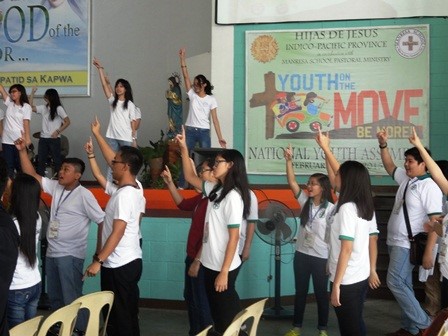
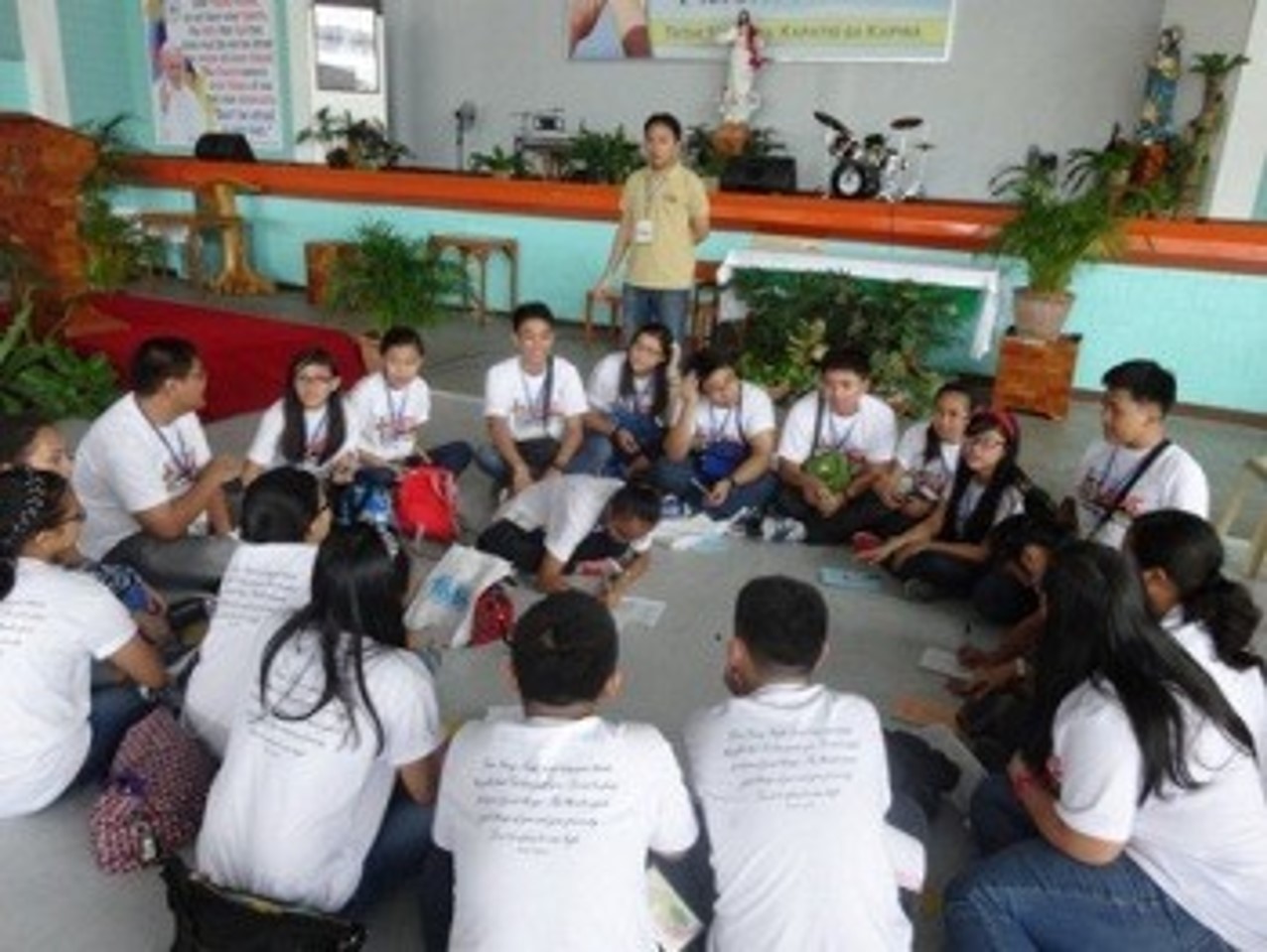
“YOUTH ON THE MOVE… BE MORE!” – DAY 1, Feb. 3:00 p.m. The National Youth Assembly
The afternoon session of Day 1 resumed at 2 p.m. with the talk titled “Realities of F.I. Schools,” delivered by Sir Francis Esmetalda, who has taught at Sacred Heart School-Hijas de Jesus (Cebu City) and is now at MS.
He began asking them to consider the question, “What do you like most about being a student in an F.I. school?” The answers from different schools came as follows: What I like most about being a student in an F.I. school is:
® that we are formed not just academically but also spiritually.
® that we learn not just about words and ideas, but about experiences.
® that we are being taught the values of being a person for others, and I am proud to be a Marisian.
® that the real essence is found in the spirit of filiation experienced by the students, who treat each other as brothers and sisters without malice.
® that we learn not just academic things, and we appreciate that not all students are given this opportunity to receive a Catholic education.
® that we are taught CLE, with nearly all subjects incorporating its values, and that we treat each other as brothers and sisters.
® that the school emphasizes not only being intelligent but also being formed spiritually. We realize that success is not just about holding the best jobs but about living as Christians, as part of the Church.
® that we have Catholic Life Formation, and our teacher ensures that the lessons don’t stop in class but that we live them out in our lives, and beyond graduation, every day and at every moment.
Surprising the students, Sir Francis invited them to listen attentively as he requested each delegation to recite their vision-mission statement. One by one, the schools shared their vision-mission statement. Stella Maris delegates sang their vision-mission. Then the delegation from Naic, Cavite clarified that they do not come from an F.I. school, but from a community named Ciudad Nuevo where they have BEC and kids’ and youth formation.
Sir Francis thanked them for their participation, then asked the students to note what words or phrases in the VM statements sounded familiar to them. The answers were: simplicity, filiation-fraternity, Christ-centeredness, God is Father, and we are all brothers and sisters, just and humane society, sense of service to the common good, sense of Church, collaboration, love for the poor, love for nature. He also noted the mention of three persons: St. Candida and her charism, Mary as inspiration, and Jesus as Model.
He pointed out that the term integral Christian education strives for the development of personality in all aspects, so that they do not become “just intellectual monsters”, but “owners and managers with a heart”; that hopefully, when they graduate, they will have become persons who treat everyone else as brothers and sisters.
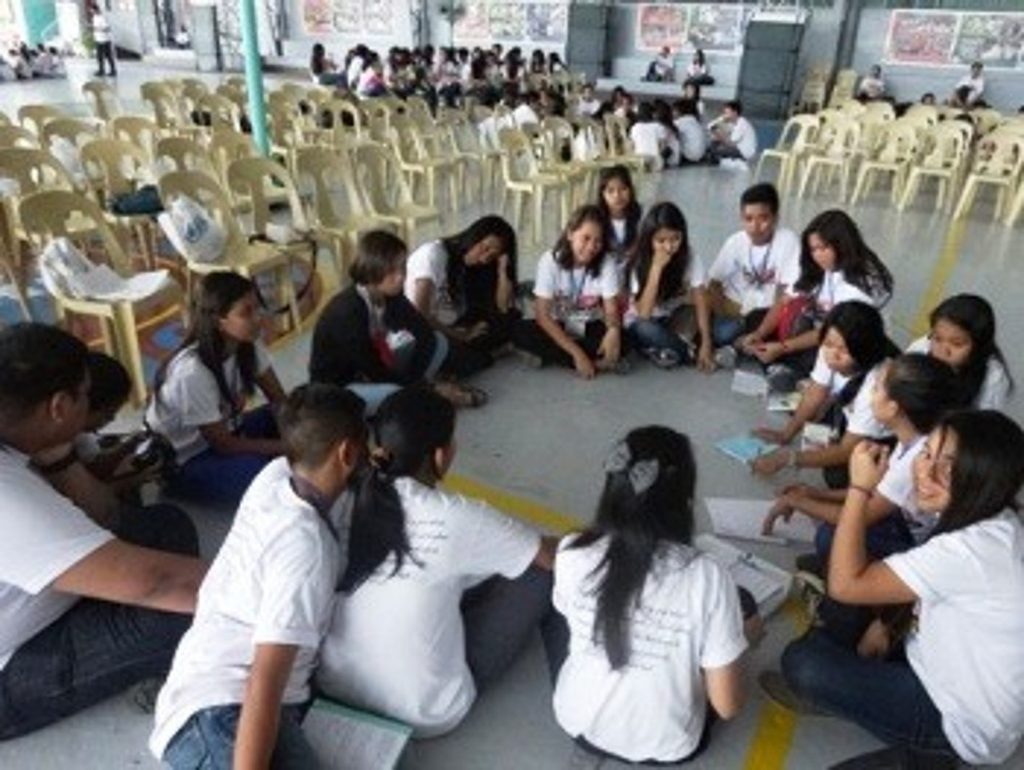
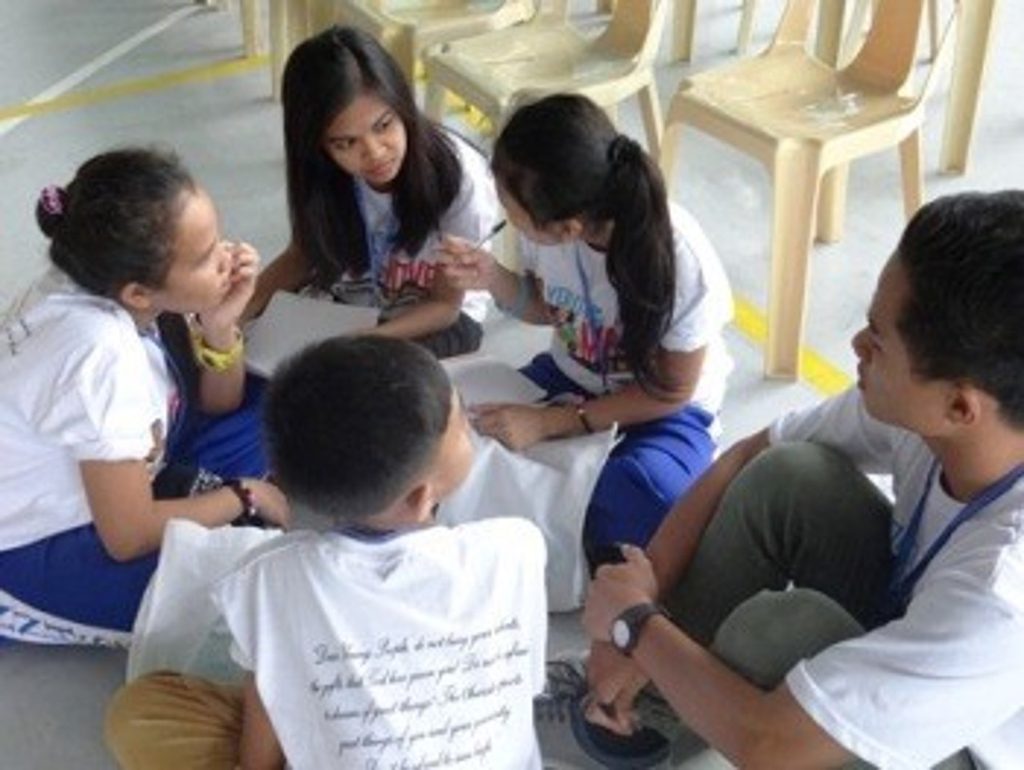
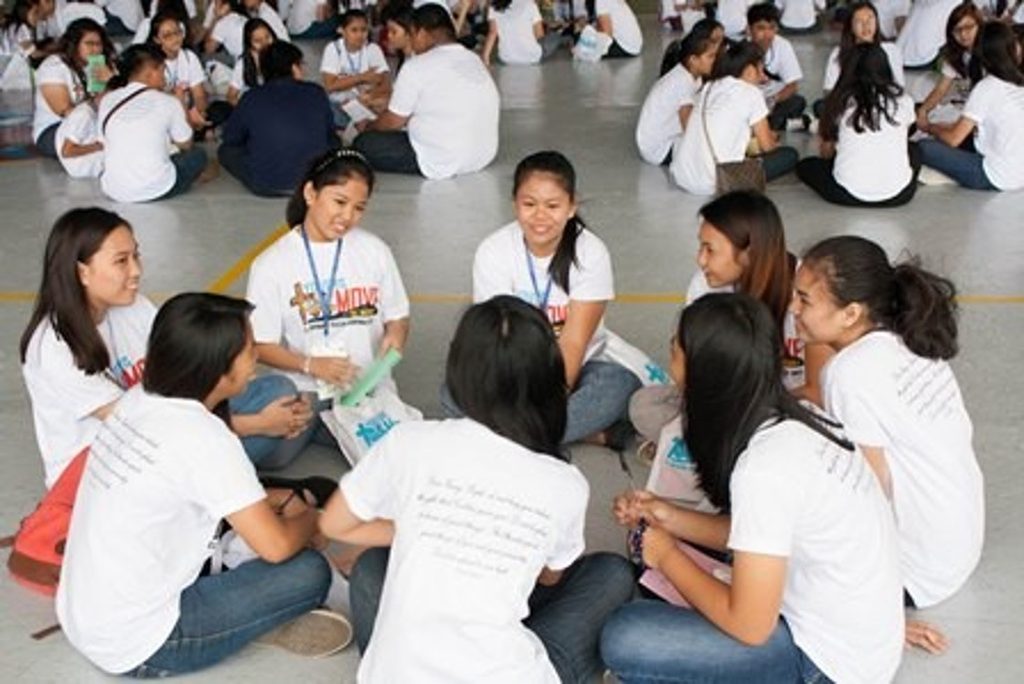
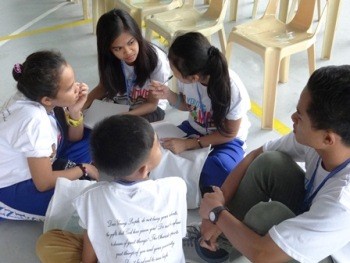
The participants were grouped by schools to answer the following questions: (1) What programs/ activities are offered in your school to help you maximize your giftedness to be of service to others? (2) What is the quality of the participation of the students in your school generally? as “critics”? as “regular moviegoers”? or as actors who actively participate?
The answers given to the second question were varied, with corresponding explanations:
® Most, if not all, are actors who participate actively in the activities and programs.
® We are actors but also critics who look for ways to improve the activities/programs.
® We belong to all three because as “moviegoers”, we observe; as critics we criticize to help improve; and as actors we participate actively.
® We belong to all three, but we are also observers and shepherds. And we all work under the fatherhood of God.
® We are actors who participate actively, doing everything in Him, with Him and for Him. We have a catchphrase, “In Jesus we have everything; without Him, everything we have is lost.” We are critics as well because we have the capacity to judge, to improve for the future, and become concerned for others.
Two groups enumerated their activities as well. The group from Ciudad Nuevo shared that every Sunday after Mass, they have activities prepared by Sir Francis and Ms. Loi Mandario, such as the explanation of the homily, group sharing, and preparation to be lectors and facilitators.
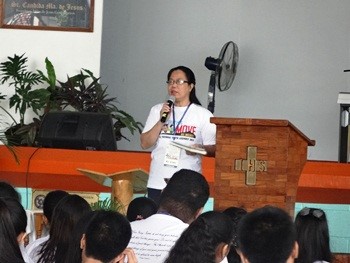
At 3:15 p.m., Ms. Bonna Bayais, Assistant Principal for the Elementary Department of Manresa School, gave a synthesis of the talk and presented the question for reflection and group sharing: “What can I do so that my fellow students/youth can move from being _____ to _____?” The assembly was then divided into 27 groups, where the participants shared their thoughts and reflections until the break.
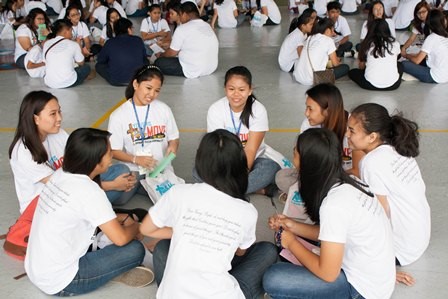
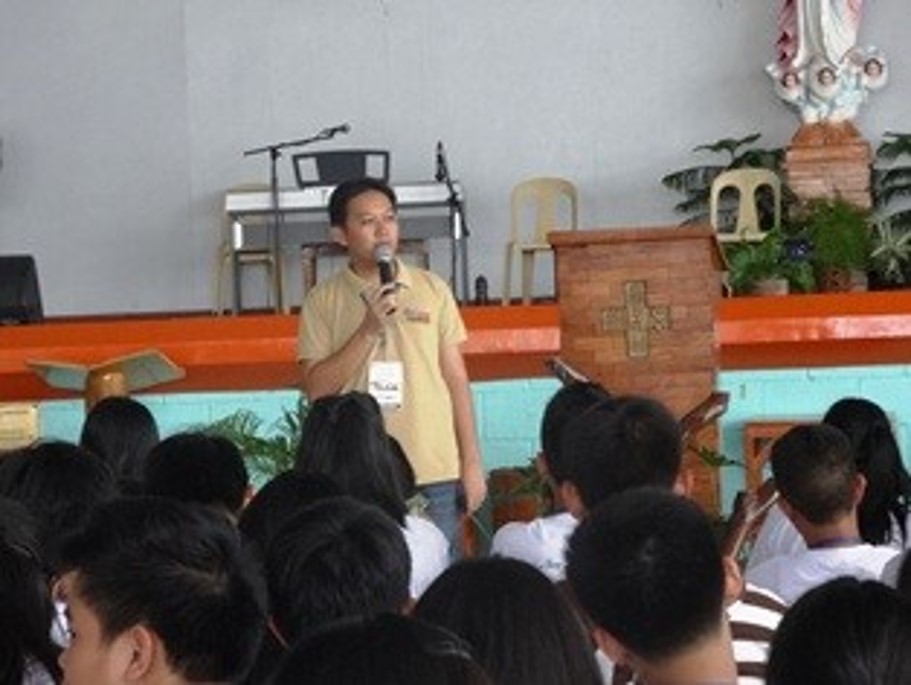
After the break, the second talk of the afternoon, “My Own Reality As A Youth”, was delivered by Mr. Tristan Felipe, MS alumnus batch 2013 and Mother Candida Awardee.
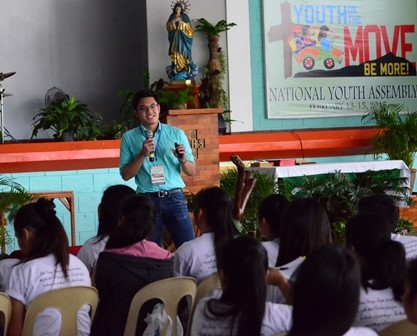
He began by saying that he hoped to share his experiences and reflections to inspire the delegates “to be more”. He said that he had been given five questions to answer in his talk, which would all translate into the question, “What are you in love with?” Using as an example his experience of having his first crush in Grade 4, and how it led to his paying for his own cell phone load, he pointed out how what we love leads us to certain decisions, how it challenges us to be more, and how what we do the next day is defined by our being in love. He then shared with them the prayer “Fall In Love”, attributed to Fr. Pedro Arrupe, S.J., that he had learned when he was in Year 4 in MS:
Nothing is more practical than finding God, that is, than falling in Love in a quite absolute, final way. What you are in love with, what seizes your imagination, will affect everything. It will decide what will get you out of bed in the morning, what you do with your evenings, how you spend your weekends, what you read, whom you know, what breaks your heart,
and what amazes you with joy and gratitude. Fall in love, stay in love, and it will decide everything.
He emphasized that when we are in love, it dictates our actions. He then asked the delegates, “What are you in love
with?” He went back to the five questions, going back to the prayer repeatedly throughout his talk. [IT IS HIGHLY WORTHWHILE TO READ THE FULL TEXT OF HIS TALK. PLEASE SEE THIS LINK: ] The delegates were quiet and
attentive as he went through each question. Salient points in his talk were:
® You can never be happy without falling in love.
® Even if we are in love with God, our hearts can break, as when we witness corruption and injustice.
® What we are in love with tells us what we are passionate about, and determines to whom we want to offer our actions. It decides where we want ourselves to be in the future.
® Sometimes we don’t reach our goal because God has better plans for us, and we should allow ourselves to be surprised by God, as Pope Francis exhorted the youth at UST – “Allow yourselves to be surprised by God. Don’t be afraid of surprises. They shake the ground beneath our feet and make us insecure, but they move us forward in the right direction.”
® It is only when we make ourselves available to God that we allow him to make miracles for us and through us. Have a dream, yes, but surrender that dream to God.
He urged them to identify what or with whom they are in love, and to use their talent to serve the people
around them and the people they love. He repeated, “Fall in love, stay in love, and it will decide everything.” He stressed that nothing comes easy in life. As young people now enclosed warmly in school with the full support of their teachers and the sisters, what they find hard now is nothing compared to what they will find in college. Wherever they go, they will encounter difficulties, but if they fall in love, it will motivate them to go forward.
He added that they also need to be in love with the people around them. Otherwise they will end up merely loving
and serving themselves.
Saying that what we are in love with defines our thoughts, plans, and actions, he led them to see that our daily
actions build up into habits, creating culture which in turn defines our society, and thus generating reality. If one is in love with enriching himself, he will act accordingly, acquire the corresponding bad habits, contribute to corrupting our culture, and this will go down to the next generations. He informed them that he missed an important meeting to give them this talk today, and told them his reason – that he promised God that he would help build His Kingdom here on earth, and he realizes that the best way to do this would be by educating the young, and this was how he got involved in student government. He revealed that he was thinking of all these young people from F.I. schools that he would find here today; if he could educate them in the mindset of being in love with God, hopefully they would change their habits, contribute to our culture, and counter the movement toward corruption and injustice.
He then asked them if anyone had a question. The students, apparently moved, remained silent and attentive. He
then said that he had questions for them to reflect on:
- Describe your ideal society. What specific reality in our society would you like to change?
- What can you do, what would you be willing to do to achieve this?
Finally, he reminded them that there is always a tradeoff in everything, so they must decide now what life they want to live, what kind of society they want. And he urged them to share with other youth what they had heard today.
The usual journal writing and group sharing followed after the break.
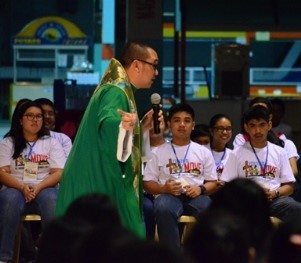
Then at 6 p.m. Fr. Jeff Manlapig celebrated the Eucharist and joined them at dinner at 7 p.m. At 8:00, the
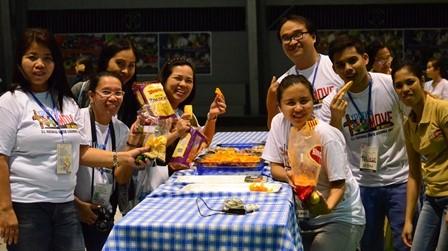
socialization followed. The first batch of delegations from Iloilo and Guimaras took charge of the cultural presentation…
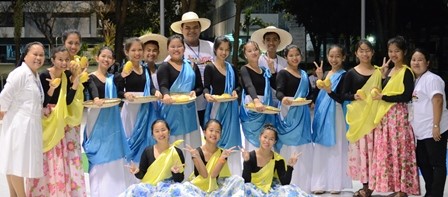
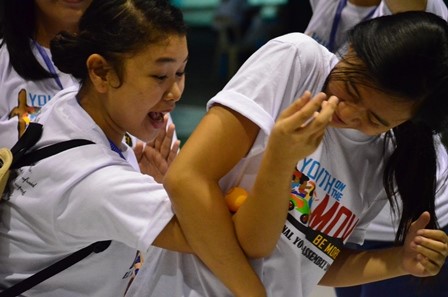
…treating the assembly to delicacies from their respective places. Games followed, and then the night worship
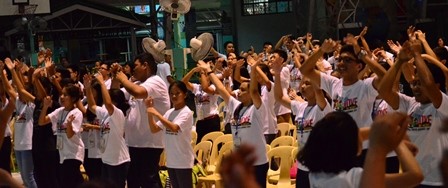
from 10 to 11 p.m.