“CASA BLANCA”
NEWS FROM JAPAN
As we begin 2017, we would like to share with you the article below, originally published in Japanese in the December 25 issue of the CATHOLIC WEEKLY, the national newspaper of the Catholic Church in Japan.
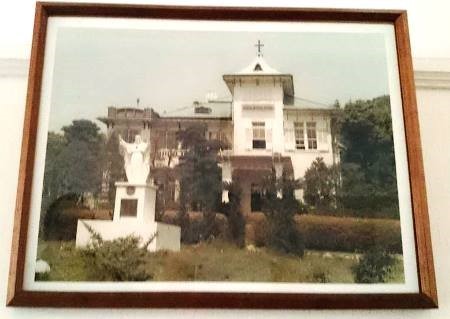
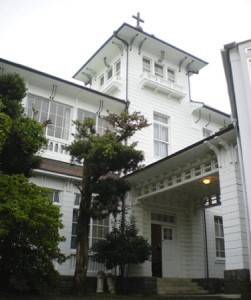
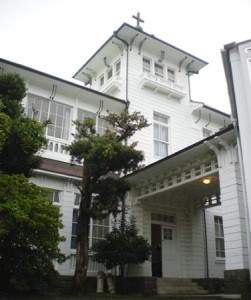
The “Old Building of the Hayama Convent of the Daughters of Jesus,” more fondly known as “Casa Blanca” or “Candida Maria House,” was the very first convent of the Daughters of Jesus in Japan. In this article, we share a glimpse of its history, the memories it holds, and our vision for its future.
John T. Kawakami-sensei made the Japanese translation.
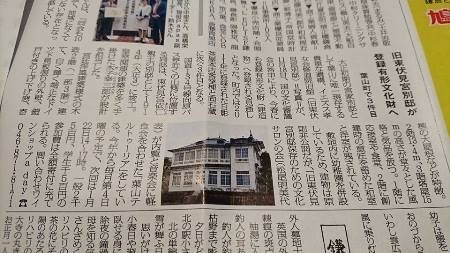
Casa Blanca was also featured in a documentary produced by a well-known Japanese television network, shown nationwide in January of this year.
Old Building of Hayama Convent of Daughters of Jesus is registered as National Cultural Property —Furniture and Furnishings still in use now–
On November 18, the old building of the Hayama Convent of the Daughters of Jesus, located in Hayama Town, Kanagawa Prefecture, was reported to the Minister of Education, Culture, Sports, Science and Technology as a candidate for registration as a Tangible Cultural Property, following a recommendation by the National Council for Cultural Affairs.
For the Sisters, maintaining this historic building has brought certain challenges and financial burdens. At the same time, however, new initiatives and projects are beginning to emerge among local citizens who recognize the value of preserving this important part of Hayama’s history.
The building itself was constructed in 1914 as a villa for Imperial Prince Higashi-Fushimi-no-Miya Yorihito (1867–1922). It would later become the first convent of the Daughters of Jesus in Japan, giving the building a special place not only in the history of Hayama but also in the story of the Congregation’s mission in Japan.
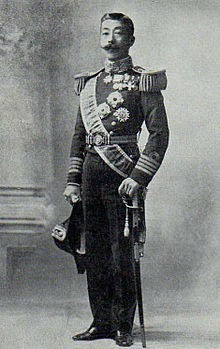
Even after the death of Prince Higashi-Fushimi-no-Miya Yorihito, the building continued to be used as a villa. In 1952, after the Second World War, it became the property of the Daughters of Jesus. The Diocese of Yokohama, which had purchased the property, subsequently entrusted it to the Congregation, and the building became an important base for the Daughters of Jesus in Japan.
At that time, the Congregation had already been engaged in missionary work in China. However, following the political changes after the war, the Sisters serving there were expatriated, leading the Congregation to establish and strengthen its presence in Japan.
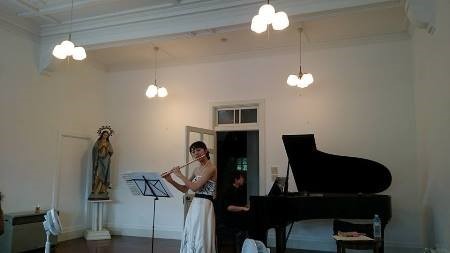
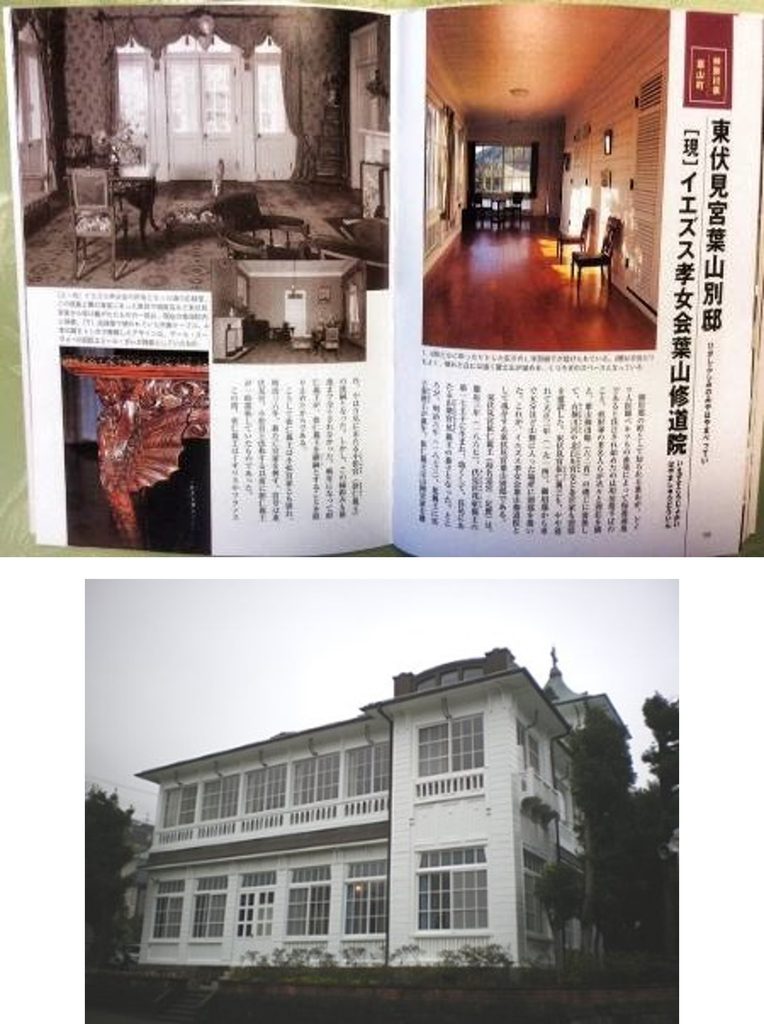
The building is distinguished by its white wooden exterior walls and stone foundations. While the interior has been adapted for use as a retreat house, it still preserves many features from its days as a villa. The statue of the Blessed Virgin Mary has been placed inside, while some of the original furniture and furnishings remain in use, including those bearing the Chrysanthemum crest of the Imperial Family.
The building continues to serve the local community in various ways. On weekdays, parents of children attending the adjoining kindergarten gather there for Bible study and Spanish-language classes. On weekends, the building is made available for church activities and other local events.
The Town of Hayama and nearby residents expressed their desire to have the building preserved and registered as a national tangible cultural property. In response to their request, the Congregation began the necessary procedures for registration.
According to Sr. Yolanda Brandolin, the process proceeded smoothly, partly because the building had already been selected as one of the “One Hundred Buildings of Kanagawa Prefecture.” At the same time, however, maintaining such an old and historic building had become a considerable responsibility and financial burden for the Congregation.
“The community consists of 11 sisters, among them 6 are over eighty years old. Maintaining an old wooden building costs money, but we didn’t have an idea to raise funds for it. Besides, the facilities of the old building are not convenient, so even the church members use it less and less.”
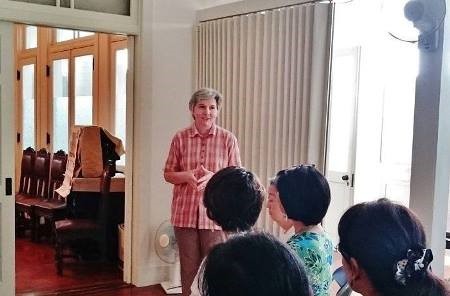
However, Sr. Yolanda also sees something more in the building. “There is something to learn from this building,” she says.
Although the building was designed in a Western style, it has a traditional Japanese room at its center. For Sr. Yolanda, this is a meaningful reminder of the character of Prince Higashi-Fushimi-Miya, who had studied abroad and was known for his openness to other cultures.
She reflects, “The building reminds us that when we treasure our own culture, we can also learn to appreciate and welcome the cultures of others.” She hopes that the building will continue to provide opportunities for people to meet one another and, as a place of encounter, become a space for evangelization when it is registered as a national tangible cultural property.
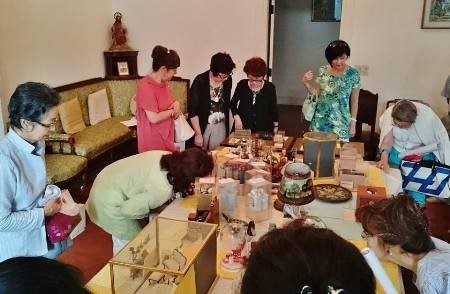
In January 2016, local residents began a gathering in the building called “Hayama Tertulia.” The name tertulia, a Spanish word for a social gathering or convivial meeting, reflects the Spanish heritage of the Daughters of Jesus, whose Congregation originated in Spain. Participants bring food and share it, creating a simple space for friendship, conversation, and cultural exchange.
The gathering came about through a proposal from the “Cultural Salon for Preserving the Villa of Prince Higashi-Fushimi-Miya,” which was established in May 2015. The Cultural Salon proposed the initiative to the Congregation as a way of raising funds to support the continued maintenance and preservation of the historic building.