
1936- The Beginnings of Colegio de las Hijas de Jesús in Iloilo
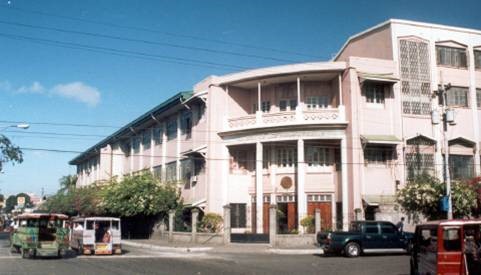
The educational mission of the Hijas de Jesús in Iloilo began after several attempts to establish a school in the city. Bishop James McCloskey had already entrusted the establishment of a school to the Siervas de San José and was initially reluctant to allow another congregation to undertake a similar work. After two years, however, the Hijas de Jesús received permission to begin their mission in the parish of Tanza.
The Sisters found a generous collaborator in Rev. Fr. Lorenzo Rogan, MHM, the parish priest, who supported them in their needs. The acquisition of the school site was made possible through the generosity of benefactors, particularly the Ledesma and Cacho families.
On June 7, 1936, the school opened its doors as Colegio de Santo Ángel. Despite the disruption caused by World War II, the school continued to develop. It already had a complete elementary curriculum before the war, and after the war, the high school program was added. In 1949, the school was renamed Colegio de las Hijas de Jesús, strengthening its identity as an educational work of the Congregation.
Over the succeeding decades, the school continued to grow in its educational programs, facilities, and community involvement. The active collaboration of the Parent-Teacher Association, particularly from 1975 onward, contributed to the improvement of facilities and equipment.
In keeping with the Congregation’s concern for those who had fewer opportunities, the Candida Maria de Jesús Foundation was later established through the joint efforts of the Sisters, faculty, students, and parents. Its purpose was to provide educational opportunities for poor but deserving students and to support the school in responding to various needs. The continuing involvement of the alumnae also became an important part of the school community.
Thus, what began in 1936 as a modest educational undertaking in the parish of Tanza gradually grew into a lasting presence of the Hijas de Jesús in Iloilo—a school shaped not only by the work of the Sisters, but also by the generosity, collaboration, and faith of the wider community.
Connect with Colegio de las Hijas de Jesús on Facebook or visit their website.