
The Beginnings of The Mission in Guimaras Island
St. Joseph School, Guimaras: A Mission in Response to the Local Church
The establishment of the Hijas de Jesús in Guimaras came as part of the desire of Msgr. Jaime L. Sin, Archbishop of Jaro, to strengthen Catholic education in the archdiocese by inviting religious congregations to establish and manage Catholic schools.
The Sisters responded to this invitation by choosing Guimaras, an island off the coast of Iloilo City where there was a particular need for a Catholic school. In 1969, at the invitation of the wife of Mayor Luis Herrera of Guimaras, the Sisters visited the area to explore the possibility of beginning a mission there.
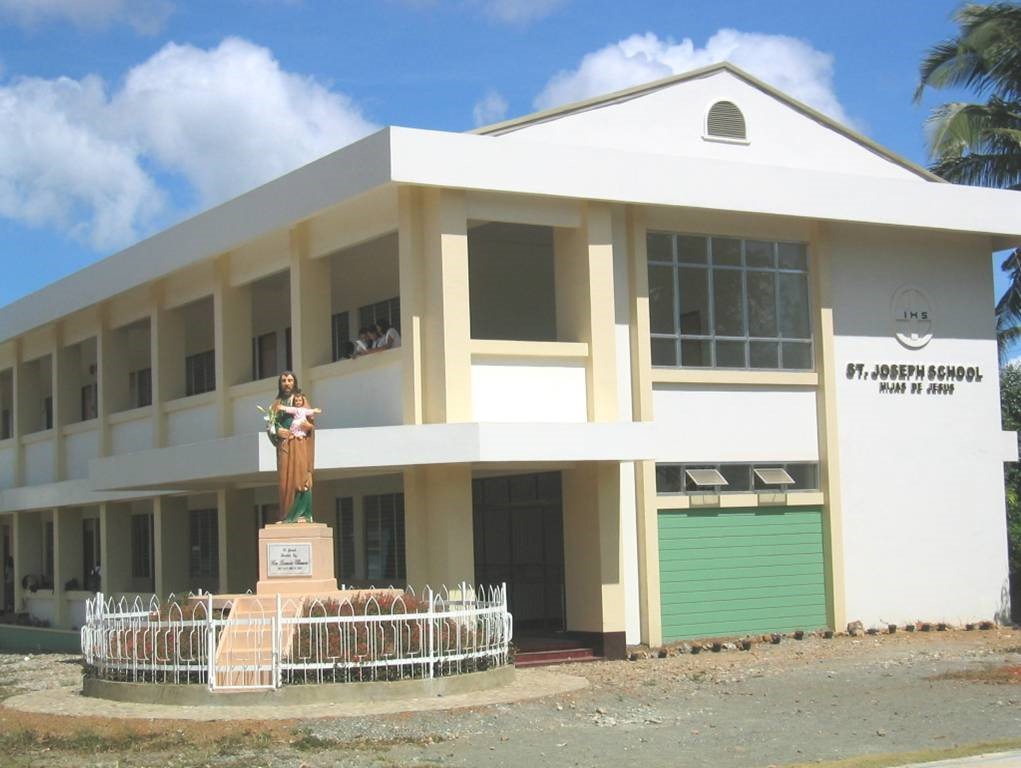
The school opened in the 1970–1971 school year, initially using a small building generously lent by the parish priest. The mission soon received further support from the local community. The Chavez family donated a two-hectare property, which became the site of the present school. The following school year, classes were transferred to newly constructed buildings. In 1976, St. Joseph School celebrated the graduation of its first students.
The school eventually offered a complete high school curriculum for boys and girls, serving a predominantly lower-middle-class and poor population. This context gave the educational mission a particularly important role in providing young people with opportunities for growth and formation.
The Sisters’ presence in Guimaras, however, extended well beyond the school. Their community was closely connected with the parish, located directly across from the school, and with the nearby Trappist Monastery, which supported the school and the neighborhood in their spiritual needs. The Sisters themselves regularly participated in the Eucharistic celebrations there.
Their apostolic mission included liturgical ministry, catechetical work, parish pastoral service, and outreach to cultural minorities, particularly the Aeta community. In this way, the sisters became part of the wider pastoral life of the island, serving not only through education but also through direct involvement in the faith and social life of the people.